WiP
Here are the articles, presentations and topics I am currently working on for future publishing.
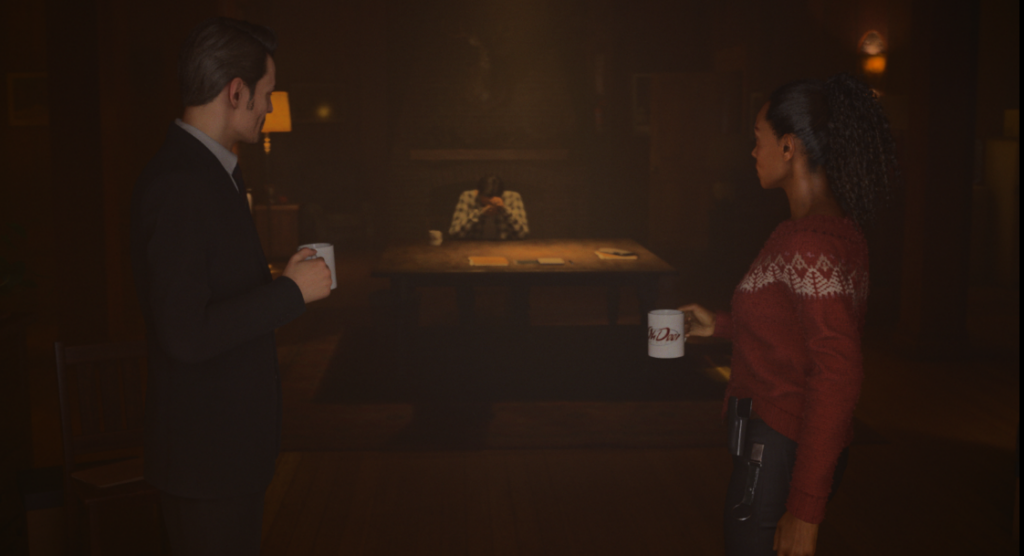
1. Art and Spectacle: Rethinking the Concept of Art Games through Modes of Video Game Practice.
Status: submitted to the peer-review journal.
Abstract:
Video games are frequently discussed in terms of a perceived opposition between commercially driven mainstream titles and artistically oriented independent productions. Although video games are widely acknowledged as capable of artistic expression, the concept of the “art game” remains theoretically unstable and difficult to define.
This article addresses this issue by examining philosophical and game studies approaches to art, arguing that existing frameworks are limited in their ability to distinguish different modes of artistic expression within the medium. To overcome these limitations, the article proposes an interdisciplinary framework drawing on film theory, particularly the concepts of art and spectacle modes of practice.
The framework is applied to three case studies: The Longest Journey, Pathologic, and Alan Wake 2. They represent different positions across independent and mainstream production contexts. The analysis demonstrates that artistic and spectacular tendencies coexist within video games in varying proportions rather than forming mutually exclusive categories.
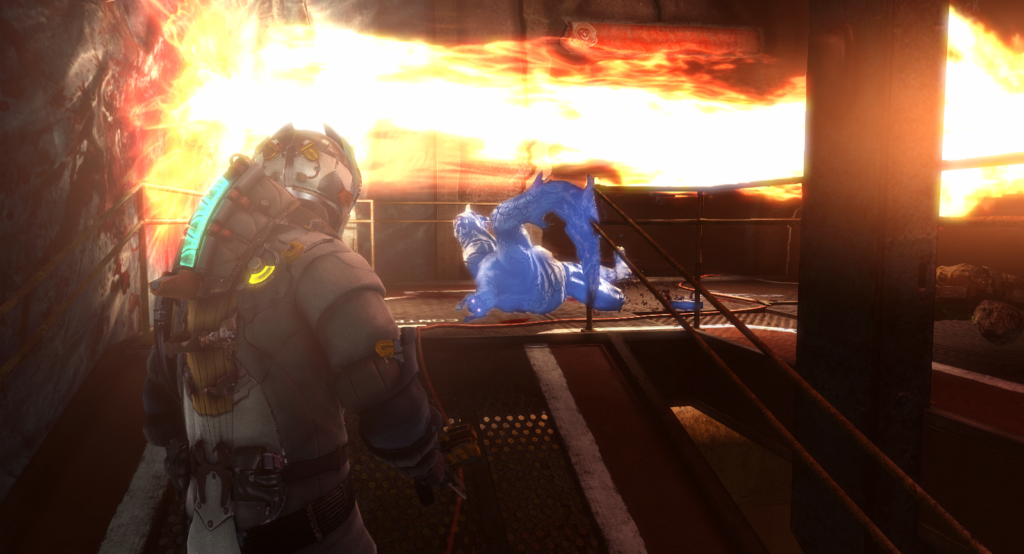
2. Dead Space through Interdisciplinary Approach: Intertextuality, Seriality, and Multiplicities.
Status: submitted to the peer-review journal. Passed first review.
Abstract:
The active development of the video game industries over the past 40 years has led to significant growth in video game titles into systems, advancements in technology, the framing and reframing of video game genres, and the concentration of intellectual property (IP) in large conglomerates. With the aging of the core and active audiences of the 80s, 90s and 00s, it was inevitable that developers and conglomerates would start appealing to older titles, regardless of their vibrance, and attempt to rerelease or continue them in various forms of repetitions: reboots, remakes, and remasters.
The practice of appealing to the past and to well-established intellectual property through repetitive content is not exclusive in video game medium. It is very often utilized in creative media industries, including cinema. Critics and audiences treat it with a grain of salt, valorizing the originals and following the superior-inferior duality. On the contrary, scholars noted the tendency and attempted to explain how the video game medium’s repetitions are distinct compared to one another.
The ongoing debates reinforce interest in the preceding and existing frameworks developed by adaptation, media, and film scholars. The discourse shifted from valorizing fidelity and originality over repetitions to emphasizing the importance of seeing “a bigger picture” through a variety of tools, such as intertextuality, seriality, and multiplicities. These methods allow avoiding deliberations and “inferior-superior” dichotomies.
Given the critical concerns about the growing prevalence of video game repetitions and in light of video game scholars’ efforts, the paper analyses whether these theoretical and analytical tools, widely accepted in film and media studies, are applicable to video games. The paper will test them using the Dead Space franchise as case studies to better understand which concepts are applicable, how they explain video game repetitions in a more comprehensive fashion, and whether the franchise produced any hybrid repetitive forms.

3. Transnational Asian on Netflix and Hulu: Ju-on: Origins and Shogun as industrial contamination.
Status: working on the second draft.
Preliminary abstract:
Transnational cooperation in film industries enabled the flow of capital, and creative talent, the increase of international coproductions, film repetitions, and improved accessibility of media projects with the global and local audiences. Consequently, it raised particular criticism based on excessive reliance on reiterations and alleged one-sided nature of such transnational diffusion, benefitting primarily Hollywood when draining the “periphery.” Asian creative industries are often seen as such “periphery,” which talents and novelties are taken over by their U.S. counterparts. This criticism raises concerns of cultural dominance and erasure of the elements of Asian locality in favor of global forms and contexts. Counterarguments appeal to the inevitability of transnational diffusion, its technological benefits for the “periphery,” the inclusion of its contexts and discourses into global trends, and the improvement of recognition.
The introduction of Netflix in East Asian countries, the growth of global popularity of “Korean Wave,” and their delicate synergy additionally reignited the debates. Skeptics raised similar concerns as before, while opponents advocated diversity of distribution and channels of reaching new audiences. However, regardless of fairness of criticism, most of these debates revolve around South Korean media industries and Netflix. Are the arguments around locality and cultural authenticity applicable to Japanese-anchored projects of streaming platforms? And how can we frame such projects: national or local, global or a blend of them?
This paper will address these questions, first, by suggesting the origins of “Netflixization” anxieties. Second, it will propose the concept of “Contamination: Film as Syncretism,” introduced by Darrel William Davis. It arises from the notion that in the era of globalization and transnational cooperation, national cultures may consist of components of other cultures. If extrapolated upon Western streaming platforms and the Japanese media industries, then its projects of high cultural content should be treated as a combination of global and national or local. To support the claim, the article presents case studies on Japanese media industries and Netflix miniseries Ju-on: Origins and FX/Hulu Shogun. The cases will illustrate how both projects reach out to the global audiences and preserve cultural specificity. Consequently, they represent a beneficial benchmark for the streaming service, artists, producers, media industries and even Japanese state, and refute traditional criticism of platform “imperialism.”

4. Hollywood Beauty Standards and AI Application: Prophetic Simone
Status: identifying research question and sketching the structure.
Main idea: Hollywood has a particular beauty standard for actors. Similarities reappear over and over again. Why does it happen? Is it only based on industrial necessity to create a pool of interchanging appearances to fit character archetypes? And how AI can «help» solidify these beauty standards? The theme was already tested in Andrew Niccol’s Simone.
5. Absurdization and normalization of discourses in Hollywood.
Status: conceptual drafting.
Main idea: How Hollywood produces movies that depict situations, events, people and their actions, even social developments turn to be a norm and standard. Is there any conspiracy behind them? Or are they essential like science fiction and adventure novels written in the XIX century and depicting modern world?
6. Analyzing Kim Ki-duk and Camera as Surveillance frame.
Status: conceptual drafting.
Main idea: Kim Ki-duk often questions the roles of the audiences and the director. Are both engaged in voyeur experience?